
Motorcade Operations
Driving Course
The 3 C's: Communication, Coordination, and Control. Individual skill matters, but motorcade operations require shared orientation. Build collective response through collective training.
Built for Teams
The Motorcade Operations Driving Course is a 2-day team program for executive protection details of 8 to 16 drivers. Teams complete online modules before arrival, then train together at professional racetrack facilities across the United States. The course costs $2,090 per driver, plus insurance and track fees, which vary by location.
The team requirement is the point. A motorcade is not a set of individual skills that happen to share a road. It is one skill, distributed across several drivers, and it can only be built by the drivers who will use it, training together.
Schedule Your Team
- 8 to 16 drivers per course
- Online prep + 2 days on track
- Training vehicles included (SUV and Sedan)
- Facilities across the United States
- $2,090 per driver + insurance and track fees
Why Motorcades Fail
Three vehicles. Three drivers. One principal. The lead spots a threat. What happens next determines everything.
In the next two seconds, all three drivers need to make the same decision. Not similar decisions. The same decision. Without shared mental models, the formation fragments.
One driver accelerates. Another brakes. The principal vehicle becomes isolated. This pattern repeats in incident reports worldwide.

The 3 C's Framework
Every motorcade operation reduces to three variables. Master these, and complex movements become executable under stress.
Communication
Radio protocols sound simple in a classroom. Under stress, they collapse. Drivers talk over each other. Critical information gets lost in chatter.
Communication discipline means knowing what to say, when to say it, and when to stay silent. It means brevity that preserves clarity.
Coordination
Coordination is shared mental models. When the lead vehicle initiates a movement, every driver should already know the next three actions.
Not because they were told. Because they have internalized the same decision framework. This is what allows motorcades to function when radios fail.
Control
Control is the authority structure that determines who calls movements and how those calls translate to action.
It includes vehicle positioning, spacing discipline, and the hierarchy of decision-making. Clear control means every driver knows their role.
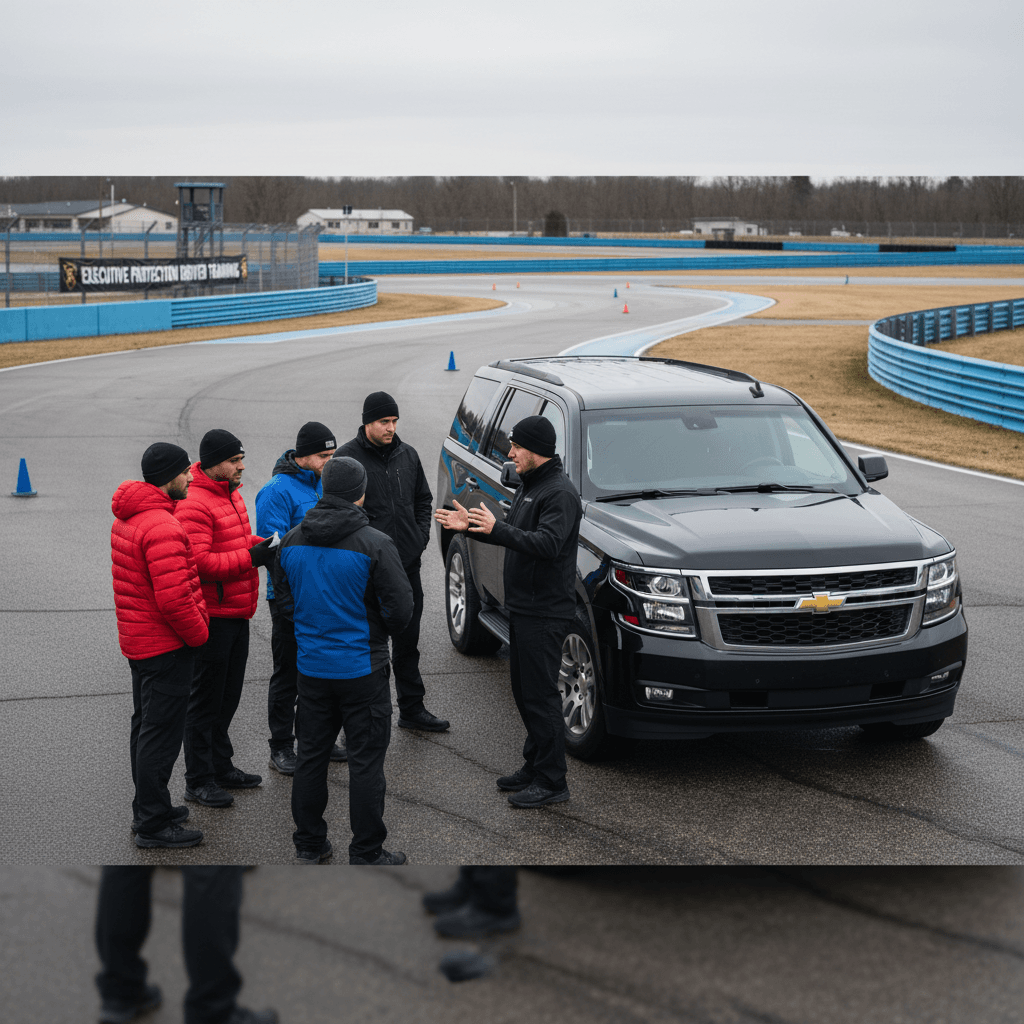
Why Traditional Training Fails
Most motorcade training happens in isolation. Individual drivers learn individual skills. Then they are placed together and expected to synchronize.
This assumption misunderstands how the brain processes information under stress. When cortisol floods the system, the brain defaults to trained patterns.
If those patterns were built individually, they will execute individually. A driver trained alone will respond as an individual, even when operating in a formation.
Course Structure
Online modules before the practical training. Two days on the track after.
Online Training
Pre-course modulesMaterial that benefits from time and reflection. Completing it before arrival means track time is used for what cannot be learned online.
- Vehicle prep and tactical staging
- Route planning methodology and checklists
- Radio etiquette and verbal commands
- Non-verbal communication techniques
- Driver vs. agent role clarification
Practical Exercises
2 days on trackA track provides realistic flow. Lane widths match actual roads. Movements have consequence. This is where the 3 C's framework becomes operational muscle memory.
- Screening and blocking techniques
- Lane changes as a formation
- Vehicle transfers under pressure
- Y-turns and reversing as a motorcade
- Arrivals, departures, and staging
- Integration with support vehicles
- FOB and aircraft approach protocols
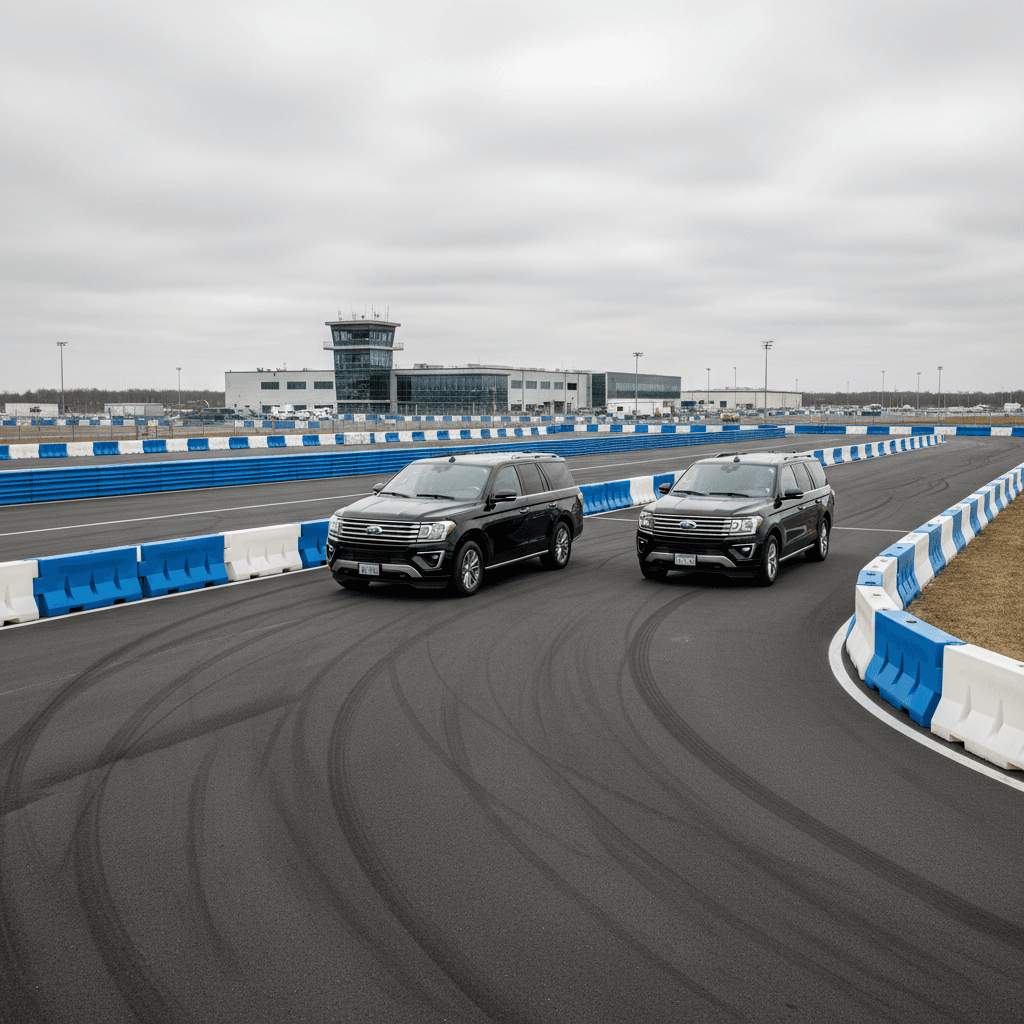
Every position has purpose.
Every movement has meaning.
The Underlying Principle
The goal is not to create drivers who follow orders well. The goal is to create drivers who share orientation. When orientation is shared, explicit communication becomes less necessary.
The formation moves as a unit because each driver understands what the situation requires, not because they were told.
Common Questions
How many drivers does motorcade training require?
A minimum of 8 and a maximum of 16 participants per course. The requirement is deliberate: a motorcade is a team skill, so the drivers who will operate together train together. Formations, radio discipline, and shared decision-making cannot be built alone.
How long is the Motorcade Operations course?
Online modules are completed before arrival, covering route planning, radio etiquette, and vehicle staging. The team then trains for 2 full days on track. Track time goes entirely to what cannot be learned online: moving as a formation under pressure.
Where does the training take place?
At professional racetrack facilities across the United States. A track provides realistic lane widths and consequences without traffic. Courses are scheduled at the facility closest to your team, or at a venue of your choosing for larger engagements.
Can individual drivers enroll?
No. Motorcade Operations is a private team program. Individual security drivers should start with the Advanced [Counter-Ambush] Driving Course, the Level I entry point, which builds the vehicle-control foundation this course assumes.
What does the course cost?
$2,090 per driver, plus insurance and track fees, which vary by location. Training vehicles, online material access for one year, and a certificate of completion for each participant are included. Contact us for a complete quote for your team.
Program Details
Requirements
- Minimum 8 participants
- Maximum 16 participants
- Valid driver's license
- Online modules completed before arrival
Included
- Training vehicles (SUV and Sedan)
- 1-year access to online materials
- Lunch and refreshments
- Certificate of completion
Location
- Multiple US facilities
- Premier racetrack venues
- Corporate rates available
“The difference between a team and a collection of drivers is built, not assumed.”
Consider your current motorcade capability. When your lead vehicle makes an unexpected movement, do the following vehicles respond as a unit or as individuals?
Build Collective Response
Contact us to schedule Motorcade Operations training for your team. Build shared orientation through collective training.