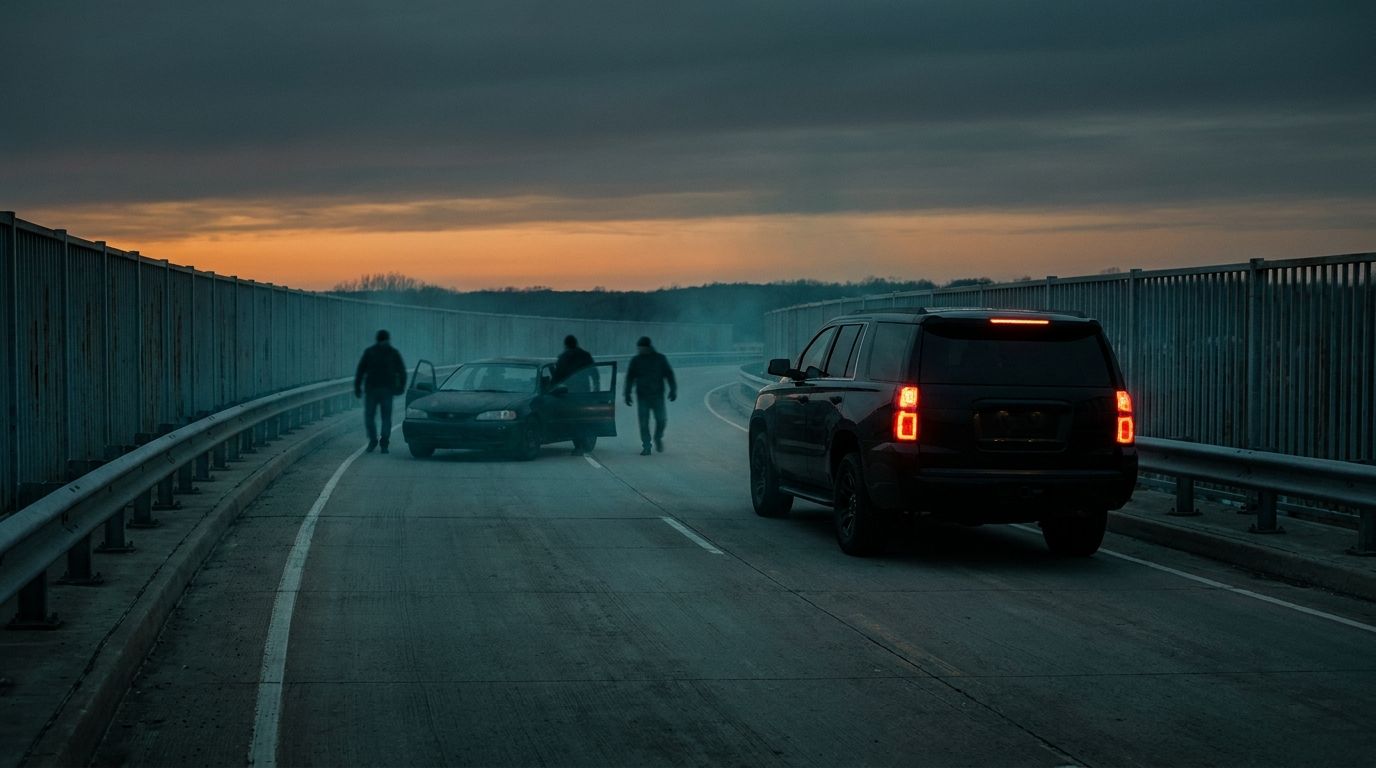
Imagine driving up a narrow ramp toward an overpass. Metal railings box you in on both sides. No shoulder, no escape lane, barely enough width for your vehicle. Ahead, a sedan stops. Four doors open. Four men step out. Four weapons rise toward your windshield.
You have two seconds to decide what happens next.
This scenario is not hypothetical. In 2022, dashcam footage from Chile captured exactly this moment. A Chevrolet Suburban ascends a single-lane on-ramp. It encounters a Citroen C5 blocking the path. Armed attackers emerge. The Suburban driver chooses full throttle. He connects with the Citroen's rear quarter panel. He drags it 20 meters up the incline. Enough gap opens to escape.
The footage went viral. Security forums declared it the definitive ambush survival playbook.
Here is what those viewers did not see: the muzzle flashes that could have come through that windshield. The rounds that could have found the driver during those twenty meters of grinding metal. The outcome that statistically should have occurred but did not.
That driver bet his life on physics he may not have understood. The odds did not favor him. He won. Understanding why this worked reveals why attempting it will get most people killed.
The Perfect Choke Point
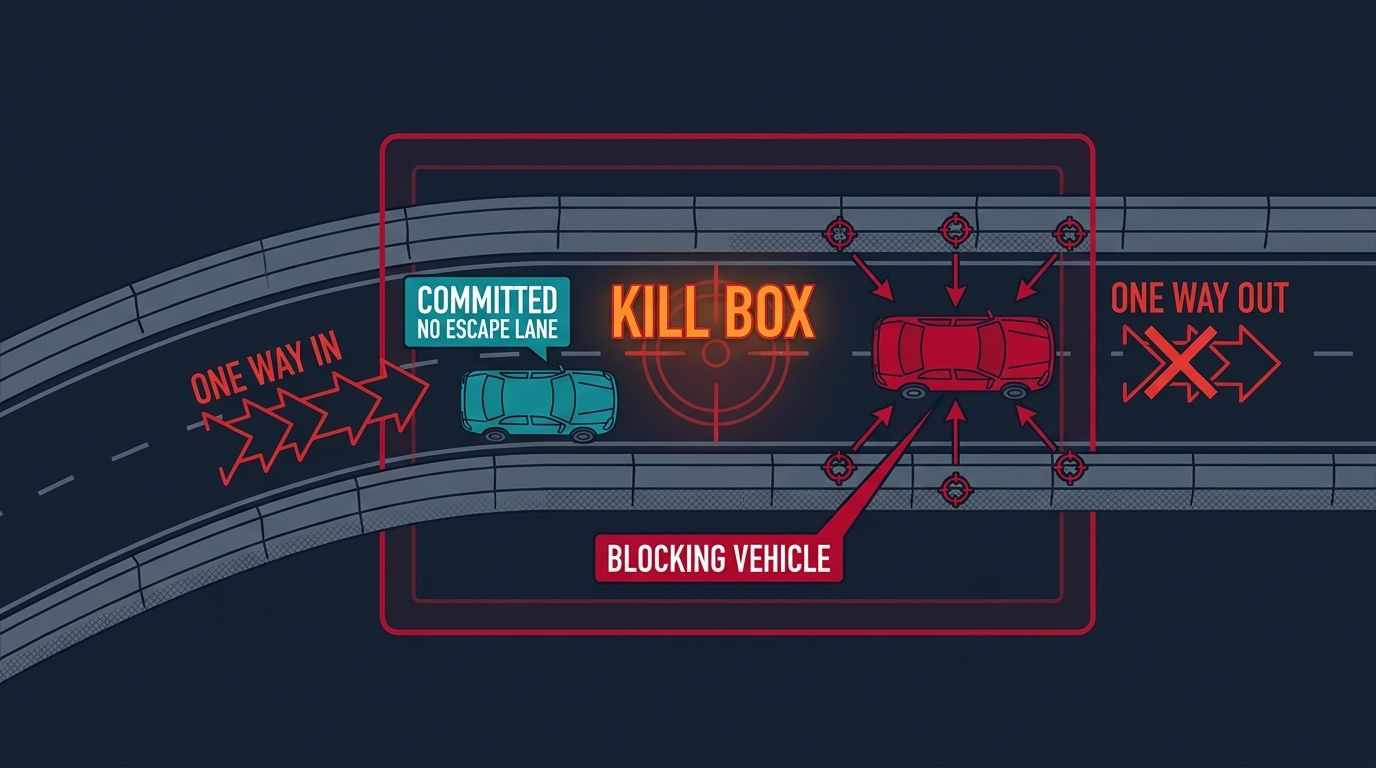
This incident occurred in Chile, not Mexico as commonly claimed. Single-lane on-ramps like this one are common throughout Latin America: one way in, one way out, concrete barriers or steep drops on both sides.
Attackers select these locations deliberately. A vehicle that enters is committed. From a tactical standpoint, these ramps are ideal kill boxes. Imagine you are stopped in one. Hostile vehicles box you in. You are already deep into a compromised situation.
Why the Suburban Succeeded
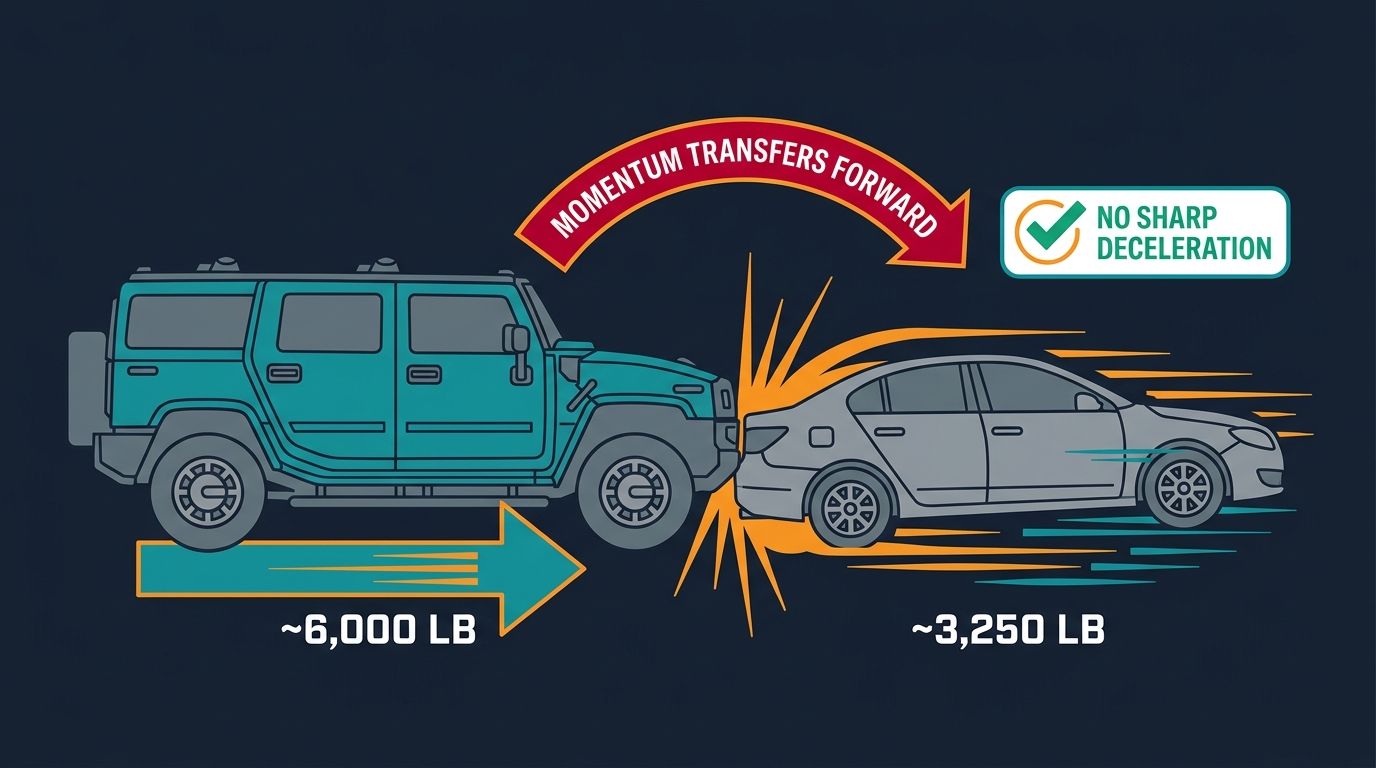
The Suburban weighs between 5,500 and 6,500 pounds. The Citroen C5 weighs between 3,000 and 3,500 pounds. This 2,000 to 3,000 pound differential is the first critical factor.
The second is torque. The Suburban produces between 460 and 910 foot-pounds depending on configuration. When it struck the Citroen, basic Newtonian physics took over. The heavier object transferred kinetic energy forward into the lighter one. The Citroen moved. The Suburban kept moving.
Critically, this continuous motion meant no sharp deceleration spike. The SUV pushed through rather than stopping against.
Why Your Vehicle Will Betray You
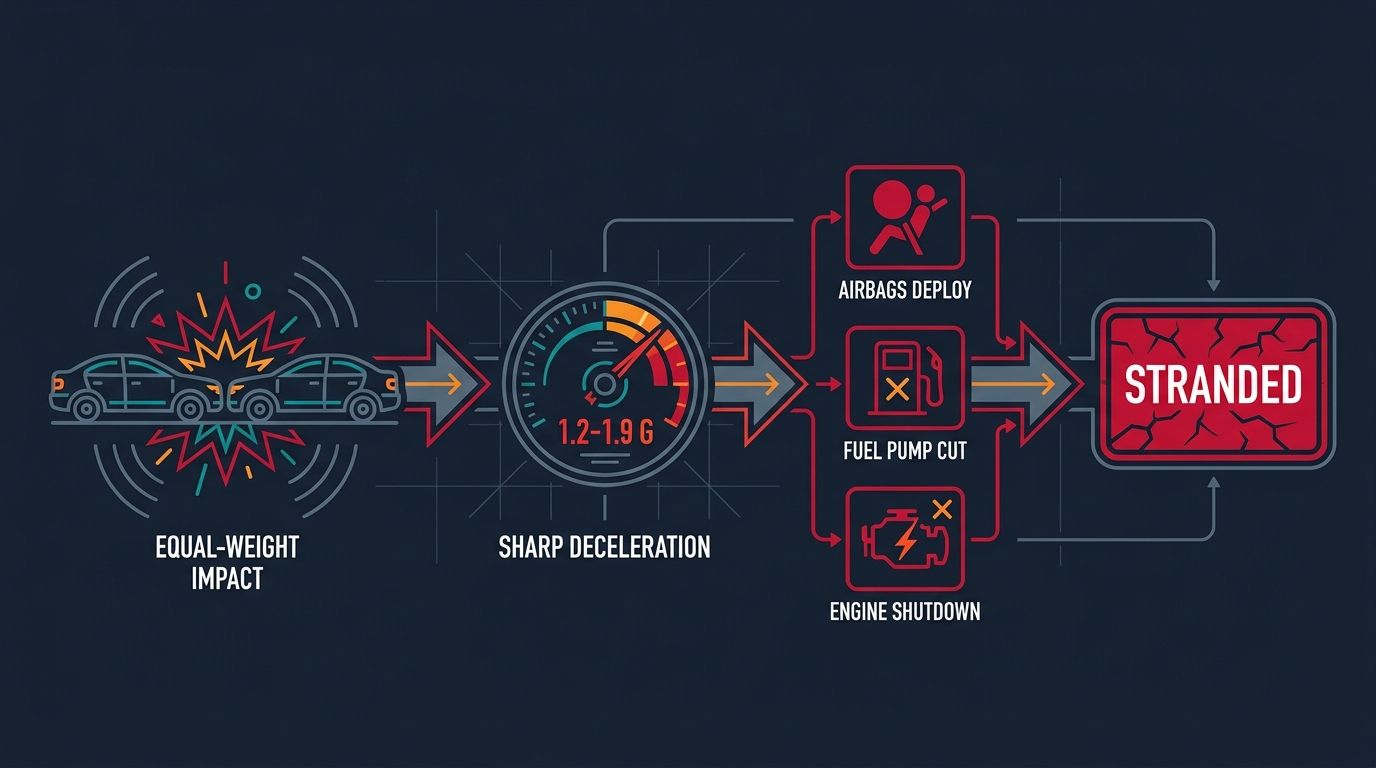
Modern vehicles contain accelerometers. They monitor G-forces in real time. When readings exceed thresholds between 1.2 and 1.9 Gs, the computer initiates emergency protocols. Airbags deploy. Fuel pumps cut flow. Engines shut down.
These systems preserve life in collisions. They are not designed to facilitate ambush escapes.
If your vehicle weighs equal to or less than the blocking vehicle, you cannot transfer sufficient momentum forward. Impact energy rebounds into your chassis. You decelerate sharply. Accelerometers spike. Airbags fire.
Now you are stationary and disoriented. Your vehicle is disabled. Armed attackers are approaching during the ambush. The fuel cutoff requires 60 seconds to reset. Sometimes it requires a hidden switch. Do you know where that switch is? Have you practiced finding it under stress?
AS3 has conducted this exact testing with manufacturers. The conclusion is consistent: most modern vehicles will work against you.
The Training Gap
These situations unfold in fractions of a second. Stress hormones degrade motor control and decision-making.
Executing a successful ram requires understanding how to project force through a blocking vehicle while maintaining throttle and steering control. This skill requires deliberate, repeated practice until it becomes procedural memory.
Without this training, attempting the maneuver escalates violence without improving your odds.
Surrender as Tactical Decision
This is the argument most security professionals resist: for most drivers in most vehicles, surrender represents the optimal outcome.
The situation in that video represents stage five of a six-stage attack execution cycle. This is detailed in the EPAccess Security Driver's Personal Security module. By stage five, the operational failure has already occurred. You are managing consequences. You are not preventing the attack.
Consider attacker motivation. South American roadside ambushes are predominantly economic. They want your vehicle, your watch, your cash. They are not there to kill you. Killing creates complications. Taking your insured vehicle is clean.
When you attempt escape with inadequate equipment, you raise the violence threshold. Guns that were instruments of intimidation become instruments of response.
Your vehicle is insured. Your life is not.
Where Security Actually Happens
The real lesson is not about the escape. It is about the failure that preceded it.
Why was that Suburban on that ramp at that time? What route analysis was conducted? Did anyone flag that single-lane overpass as a choke point?
Executive protection teams that cannot identify and route around these vulnerable transit points are operating below standard. Security is not the dramatic escape. Security is the methodical work that ensures you never need one.
The Planes That Never Came Back
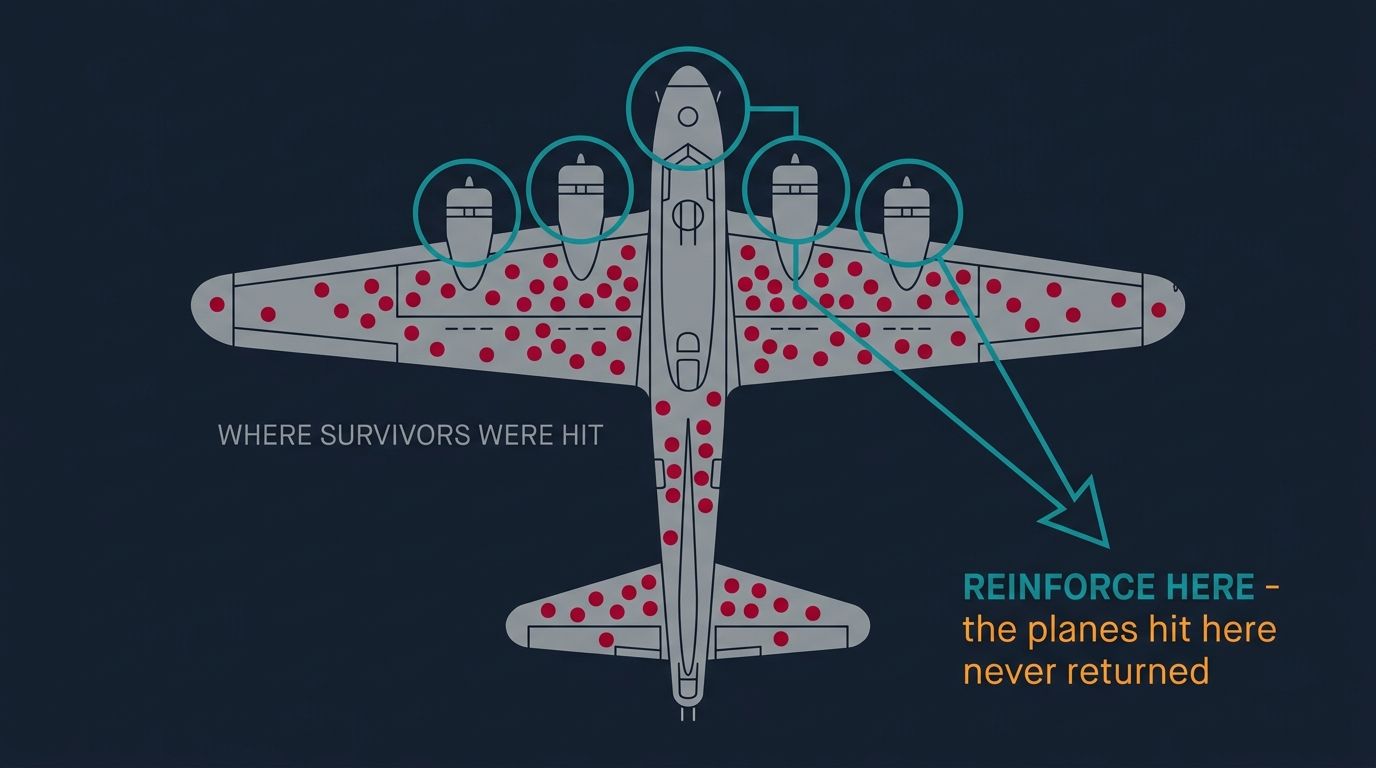
During World War II, Allied engineers studied returning bombers. They documented where bullet holes clustered. They planned to reinforce those areas.
Statistician Abraham Wald identified the flaw: those planes had survived. The bullet holes showed where aircraft could take damage and still fly home. The critical data was on the planes that never returned, hit in different places.
The viral Suburban footage is the plane that returned. We study it and build doctrine around it. But footage of drivers who attempted the same maneuver in a Camry does not go viral. Those vehicles did not push through. Those drivers did not escape.
Those are the planes that never came back.
The best ambush response is never being in one.