Tires are the only means through which forces are transferred between the vehicle and the pavement. This is why tire pressure matters so much. Therefore, we can say that they are the most important part of the car.
The greater the contact area between the tire and the pavement, the better grip and stability the vehicle will have, which is why racing cars use slick tires, on the street, the thread of the tire only serves to displace water and avoid aquaplaning.
When a new vehicle is designed, engineers and the vehicle designer come together to set the ideal tire pressure. This is one of the most complex functions. The chosen pressure gives the tire the largest contact area with the pavement. It also gives the tire the longest possible life. This area is not determined by the width of the rim. It is determined by the weight and air pressure in the tire.
Changing the tires of a vehicle for wider or higher profile will not increase the area. This area will always be the same as long as the weight of the vehicle is not modified.
And this is the main reason why in the specifications of any vehicle the pressure changes according to the weight that is loaded on the automobile.
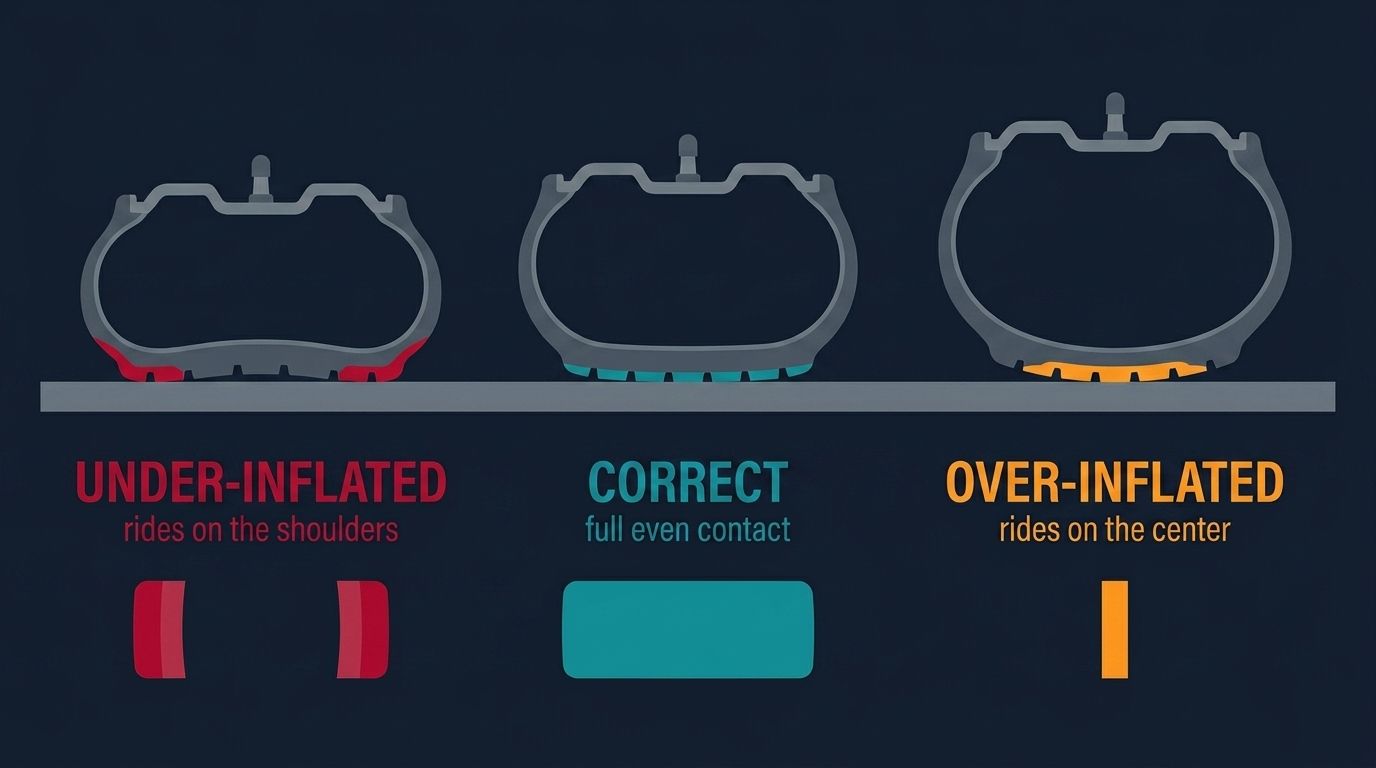
A tire with low inflation pressure may appear wider to the naked eye. Low tire pressure causes the weight of the vehicle to fall on the walls of the tire instead of the air inside it. The tire becomes concave in the middle and loses a lot of contact area. In addition, this tire will wear out on the shoulders and will last much less.
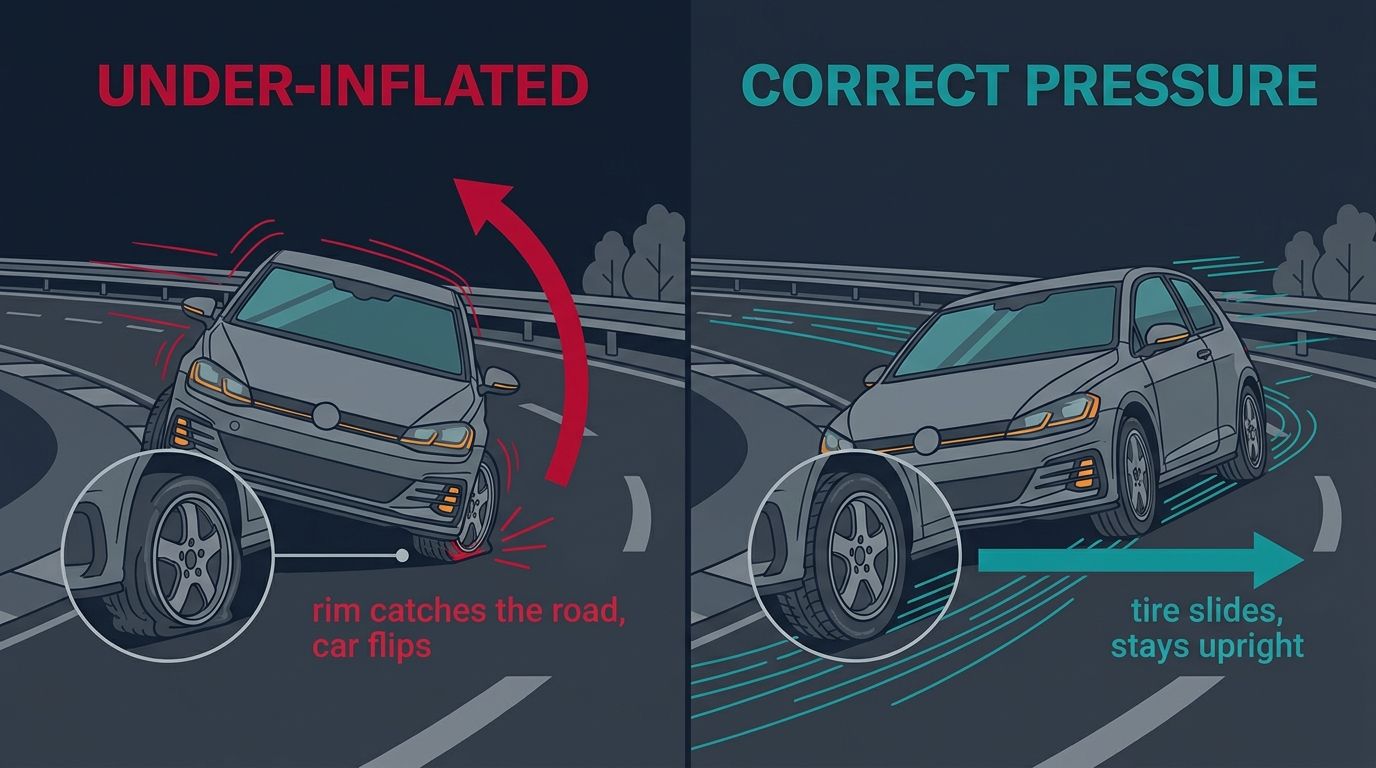
IMPORTANT NOTE A tire with low air pressure can cause the rim to touch the pavement in a very tight corner or in an emergency maneuver. This will cause the car to turn over. An adequate pressure will allow the vehicle to slide when it has reached its maximum limit of adhesion.
A tire with too much pressure becomes oval. Only the center of the thread has contact with the pavement. This causes the tire to last much less. It also gives the vehicle much less grip in curves or in water.
What Correct Pressure Buys You
- Lasts much longer
- Improves the maneuverability of the car
- Prevents accidents
What the Wrong Pressure Costs
- Spend more gas
- It lasts a lot less
- Affects car performance
- Holds much less load weight
So what is the right pressure for the tires?
The one indicated in the manual designed by the vehicle manufacturer!!
It does not matter what the "experts" say. Not even the manufacturer of the tire knows the right pressure. The correct tire pressure depends on many factors. Only the engineers who designed the vehicle know the correct measurement.
NOTE: Tires are not 100% sealed and therefore lose minimal amounts of pressure through their walls continuously, so it is important to check them once a week.