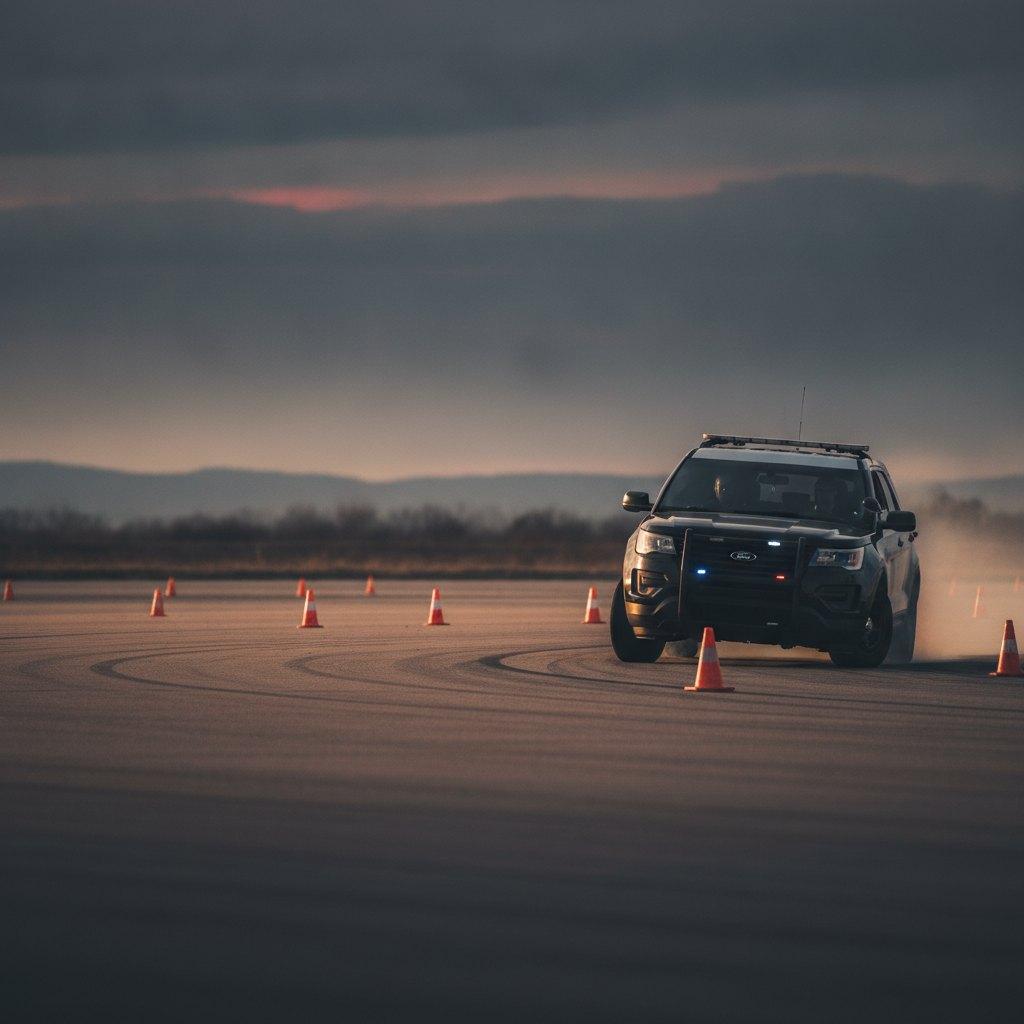
Police Driver Training
Every EVOC Run Measured.
Every officer on your roster qualifies on the range with a number. Driving is where the shift is spent, and it is graded by eye. AS3 puts telemetry on every EVOC run and rates every officer against one standard, so your training unit knows who can control a patrol car at its limit, and keeps knowing it year after year.
The Gauge Reads Full
In 1996, Nils Petter Gregersen put fifty-three new drivers on a skid car for thirty minutes. Half were trained to master the skid. Half were trained to respect how fast it takes the car away. A week later both groups recovered the car equally well. Their self-assessments split. The mastery group rated themselves above what they could do. The other group rated themselves right.
Norway had already run the experiment at national scale. Mandatory skid training from 1979, and crashes among young male drivers rose 17%, 23% on wet and icy roads. Skill stayed where it was. Confidence went up. Nothing in the system could tell the two apart.
That is the gauge a training unit operates on when the only score is completion. It reads full the entire way down.
The officer to worry about is the one you trust without checking. Clean record, steady hands, twelve years on patrol. He may carry skill and certainty in equal measure, or he may not. Nobody has looked.
One in five officers killed in the line of duty between 2014 and 2023 died in a vehicle crash (NIOSH). Lord Kelvin said it a century earlier: if you cannot measure it, you cannot improve it.
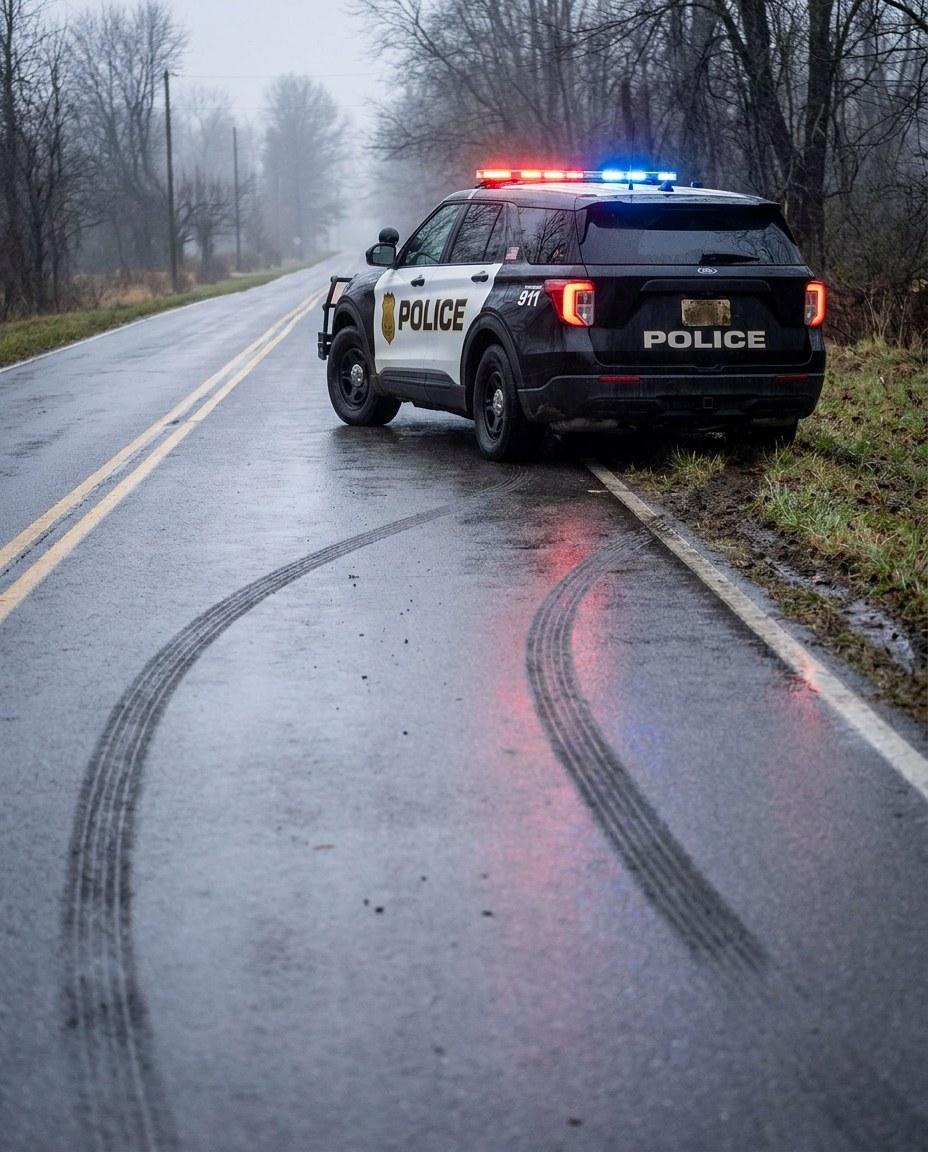
Clean record. Steady hands. Twelve years on patrol. Nobody has looked.
Built on Your EVOC Program
The Emergency Vehicle Operations Course is the foundation of police driver training. It teaches the law of emergency response and pursuit, how weight moves in a patrol car, and the control inputs that keep it on the road.
AS3 keeps all of it: your exercises, your policy, your state requirements, your instructors. It adds one thing. Every run produces data, and every officer is rated against the same standard.
What EVOC covers
- Emergency response and pursuit law
- Vehicle dynamics and weight transfer
- Braking and steering control
- Serpentine, lane change, and backing
- Skid control and recovery
What AS3 adds
- Telemetry on every run
- One standard: 80% of vehicle capability
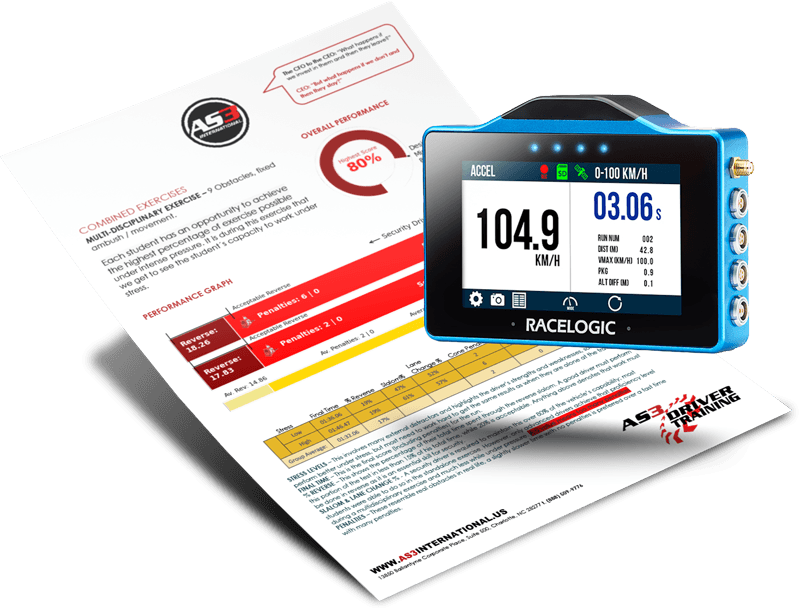
- An individual report for each officer
- Decay tracked between refreshers
- Records kept year over year
Measure the Driver at the Limit
A tire has only so much grip to give. Think of it as a budget. The driver spends it on braking, on turning, or splits it between the two. Ask for more than 100% and the car goes. The Society of Automotive Engineers puts the average driver's comfort zone at 40% of that budget. A patrol car in trouble lives in the other 60%, and a brain that has never been there has no model for it. Recognition comes late. The first correction is small and the second is the crash.
So we train there. Every exercise runs at 80% of the vehicle's capability, the standard a security driver has to hold under fear-induced stress. A Racelogic data logger in every car records every run to 0.1 seconds and 0.1 mph: speed, braking force, lateral g, line.
The debrief happens against the data. The officer sees what the car did next to what he believed he did, run after run, until the two match. That match is calibration, and calibration is the skill.
From the Military to the Lab
The method is older than the technology.
Stress inoculation
Lt. Col. Dave Grossman, On Combat: you sink to the level of your training. Every exercise runs under time pressure with threats the officer did not see coming, so the stress is familiar before it is real.
The OODA loop
Col. John Boyd put orientation at the center of everything. A trained pattern lets the officer move from orientation to action with nothing in between.
Deep practice
Daniel Coyle: skill grows fastest at the edge of ability, with feedback on every error. Telemetry is that feedback, after every run.
The brain under stress
Amy Arnsten at Yale mapped how acute stress quiets the prefrontal cortex and hands control to reflex. We build the reflex so it has something to run.
After-action review
The Army's AAR on every exercise: what should have happened, what happened, what changes on the next run.
One Standard, Held Across the Team
A score changes what a training unit can do.
Every officer on one scale
Same exercises, same standard, same data, whichever instructor ran the class and whichever year the officer came through the academy. A rookie and a twenty-year veteran read on the same sheet.
Every gap known
For each officer, the distance between what he can do and what he believes he can do, in writing, exercise by exercise. Who drives the lead car becomes a question the data answers.
Show as table
| Officer | Day one | Final run |
|---|---|---|
| Officer 01 | 34% | 78% |
| Officer 02 | 38% | 81% |
| Officer 03 | 41% | 80% |
| Officer 04 | 43% | 83% |
| Officer 05 | 45% | 82% |
| Officer 06 | 46% | 85% |
| Officer 07 | 48% | 81% |
| Officer 08 | 50% | 84% |
| Officer 09 | 52% | 86% |
| Officer 10 | 53% | 83% |
| Officer 11 | 55% | 85% |
| Officer 12 | 57% | 88% |
| Officer 13 | 58% | 84% |
| Officer 14 | 61% | 87% |
| Officer 15 | 63% | 86% |
| Officer 16 | 66% | 89% |
Sample report. Values show the format, not a specific class.
Sample record. Values show the format, not a specific officer.
Every decay seen
Driving is a perishable skill. The U.S. Army Research Institute's 2025 analysis of 457 studies puts half of what training built as gone at roughly six months. Sabol and Wisher measured losses of up to 83% after a year away. The structure stays and the access decays, which is why the return trip is short: Gardlin and Sitterley found people got back to standard in well under half the original repetitions. With a baseline, your training unit sees the fade in the data and schedules the refresher against the decay rate instead of the calendar. Every return is a repair and an increase at the same time.
Every record kept
Officer by officer, year over year, online. A training file command staff and risk management can read in a minute.
That is consistency: replicable performance across the whole roster, with the proof attached.
“Human performance in relation to driving is highly overlooked in a lot of the industry's training. It should be taken more seriously.”
“I've been law enforcement for many years. We're required to train with EVOC once every other year to maintain that certification. In comparison to this, it's nowhere near where it should be. They could learn a lot from AS3.”
Shawn Thibeault, former police officer, Las Vegas, Nevada
Two Ways to Put Data in Your Program
On-site in your patrol vehicles, or at AS3 venues across the United States. Either way, every run is measured against the same standard.
AS3 trains your officers
The 3-Day Advanced Program: online preparation, then three days on track. Vehicle dynamics at the limit, then a full day in reduced grip, working through understeer, oversteer, sustained slides and the transitions between them, every recovery on the record. Each officer leaves with an individual performance report, and your training unit leaves with the whole class.
You run it. We equip and guide you.
The AS3 system inside your own program: telemetry hardware and analysis software, exercise layouts with target standards, training for your instructors on running the exercises and reading the data, and hosted officer records year over year. It starts with a 1-day proof of concept. Your instructors run your exercises in your cars, with our telemetry and our people beside them. By the end of the day you have a measured baseline for every officer who drove.
Police Driver Training Questions
- What is EVOC training?
- EVOC stands for Emergency Vehicle Operations Course. It is the core of police driver training in the United States: emergency response and pursuit law, vehicle dynamics, braking and steering control, backing, and skid control, taught on a closed course. Each state's POST or training commission sets its own hours and refresher intervals.
- Does AS3 replace our EVOC program?
- No. AS3 adds measurement to the program you already run. Your exercises, your pursuit policy, and your state requirements stay as they are. What changes is that every run produces data and every officer is rated against one standard.
- Does AS3 issue EVOC or POST certification?
- No. AS3 does not certify officers or instructors. Your certification path stays with your state and your academy. AS3 provides the data: an individual performance report for each officer and a record your training unit keeps year over year.
- What does the telemetry measure?
- A Racelogic data logger in every car records each run to 0.1 seconds and 0.1 mph: speed, braking force, lateral g, and line. Every officer is measured against the same target, control of the vehicle at 80% of its capability.
- Where does the training take place?
- On-site at your facility in your own patrol vehicles, or at AS3 venues across the United States. The standard and the data are the same in both.
- How often should officers refresh their driving skills?
- Driving is a perishable skill. The U.S. Army Research Institute's 2025 analysis of 457 studies puts half of what training built as gone at roughly six months. With a measured baseline, your training unit schedules refreshers against each officer's decay rate instead of the calendar.
- How does an agency start?
- With a 1-day proof of concept. Your instructors run your exercises in your cars, with AS3 telemetry and AS3 staff beside them. By the end of the day you have a measured baseline for every officer who drove.
Take the officer on your roster you trust most behind the wheel.
Has anyone ever measured the gap between what he can do and what he is certain he can do?